
Every week someone comes to me with the same story.
₹30,000 spent on ads.
4 inquiries.
Zero sales.
And now they’re convinced ads don’t work.
Or their product isn’t good enough.
Or maybe business just isn’t for them.
I ask them one question.
Who exactly were you trying to sell to?
They look at me like that’s too simple to matter.
That’s the problem right there.
Nobody wakes up thinking about their business model.
They think about their logo.
Their Instagram page.
Their ad creative.
They jump straight into execution without answering the one question every business needs to answer first.
How does money actually move in your world.
And who is making the decision to spend it.
Skip that question and everything you build after is built on sand.
Good content on sand.
Good ads on sand.
Good product on sand.
It all looks fine until you try to sell and nothing converts.
There are only three ways a business can be structured.
B2B.
B2C.
D2C.
I’m starting here before talking about any platform, any content format or any ad strategy.
Because these three models have completely different customers.
Completely different decision making patterns.
Completely different timelines.
Market a B2B product like a B2C product and you’ll burn every rupee you put in.
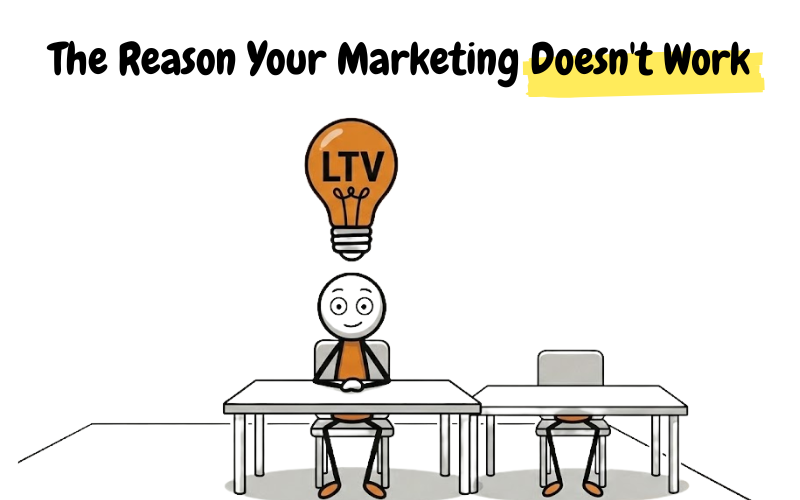
Build a D2C brand without understanding LTV and you’ll shut down a campaign that was actually working.
Most people running businesses today are making exactly these mistakes.
Not because they’re not smart.
Because nobody sat them down and explained this before asking them to spend money.
So let’s fix that right now.
Open your phone.
Look at your last ten transactions.
Swiggy. Netflix. Amazon. A clothing app.
Ask yourself honestly — how long did you think before buying each of those.
For most of them it was minutes.
Maybe seconds.
You saw it.
Something felt right.
And you bought it before logic even had a chance to show up.
That is B2C.
Business to Consumer.
And that emotional window between seeing and buying is the entire game.
Every element you see in B2C marketing is engineered to catch you inside that window.
The countdown timer.
The only 2 left tag.
The influencer holding the product with a discount code.
None of that is random.
It’s all designed to keep emotion alive long enough for you to hit pay.
So if you’re building a B2C business there is one question your entire marketing needs to answer.
What emotion makes my customer stop and pay attention.
Not what is my product.
Not what are my features.
What is the emotion that opens the wallet.
Answer that and your content, your ads, your offers will all start making sense.
Now think about the software your company uses.
Or the raw material a factory orders every month.
Did anyone buy that after seeing a reel.
No.
There was a meeting.
A budget discussion.
A vendor comparison.
An approval chain.
And then after maybe three months a purchase order finally moved.
That is B2B.
Business to Business.
And if you’re selling in this world you’re not convincing one person in an emotional moment.
You’re convincing multiple people with completely different concerns over a long period of time.
The finance person wants cost certainty.
The operations person wants to know it won’t break things.
The decision maker wants to know you’re not a risk.
This is why B2B companies that grow fast invest in case studies, thought leadership and relationships.
Not in flash sales and trending audio.
They’re not fishing in the emotional window.
They’re building trust slowly until they become the obvious safe choice when the decision finally gets made.
And that decision takes anywhere from two months to a full year.
So if you’re in B2B and checking your ad results after two weeks wondering why nothing converted —
That’s not a marketing problem.
That’s a timeline expectation problem.
The game is longer here.
And the winners are the ones who stay consistent when everyone else gives up.
Now here’s what’s changed everything in the last ten years.
Think about a brand you’ve bought from but never seen in a store.
Minimalist.
Juicy Chemistry.
Boat.
Sugar Cosmetics.
You found them through an ad or a YouTube video.
Went to their website.
And bought directly.
No distributor.
No retailer.
No shelf space.
Just the brand coming straight to you.
That is D2C.
Direct to Consumer.
And the business math behind it is the part most people get completely wrong.
When a D2C brand acquires you as a customer through ads they might spend ₹500 to bring you in.
Your first order might return ₹300.
Every traditional business instinct says that’s a failure.
Shut it down.
But D2C brands don’t measure success on the first order.
They measure it on what you’re worth over the next two years if the relationship is built correctly.
That number is called LTV.
Lifetime Value.
And it changes everything about how you read your results.
So the moment you place that first order the real work begins.
An email arrives.
Then a WhatsApp message.
Then a reward when you come back for the second order.
They are not selling you a product.
They are making you a habit.
And once you’re a habit the customer acquisition cost from that first order becomes the best investment they ever made.
Go to your inbox right now.
Search for any D2C brand you’ve bought from even once.
Look at how many times they’ve followed up since.
That sequence — deliberate, planned, consistent — is the actual product they’re building.
The face wash or the earphones is just the door they used to get in.
So here is the framework.
Three questions.
Answer them in order.
Don’t skip ahead.
Who makes the buying decision — one person at home or a group inside a company.
Person at home means B2C or D2C.
Group inside a company means B2B.
And your entire approach to content, sales and timeline needs to reflect that.
Second question.
How long does it take them to decide.
Hours or days means you need emotion, urgency and content that moves fast.
Weeks or months means you need credibility, consistency and content that builds trust over time.
Because nobody buys from a stranger at the end of a long sales cycle.
Third question.
Do you want to own the customer relationship completely.
Know their name.
Speak to them directly.
Build loyalty without anyone standing between you and them.
If yes — D2C is your path.
If you’re okay with a retailer handling that last mile — traditional B2C works fine.
Here’s what I want you to walk away with.
Every marketing tactic you’ll ever learn only works when it’s built on the right foundation.
The B2B company that knows its sales cycle is six months will never panic after week two.
The D2C brand that understands LTV will never shut down a campaign that’s actually working.
The B2C business that knows emotion drives its customer will never write a boring feature-heavy ad and wonder why nobody clicked.
Clarity about what game you’re playing is worth more than any tactic, any tool or any trend.
Most people never get this clarity.
Because nobody made it this practical.
Now you have it.
Use it before you spend another rupee.
Faqs
What even is B2B and why should I care about it?
You already interact with B2B every single day without realising it.
The software your office uses.
The raw material the factory down your street orders every month.
The security agency managing your building.
None of those were bought by a person scrolling Instagram at midnight.
A company bought them from another company.
That is B2B.
And if your customer is a business and not a person sitting at home — everything about how you sell needs to reflect that reality.
Why are my ads not working in B2B?
Because the person who sees your ad is not the person who signs the cheque.
In B2C when someone sees your ad they can buy in the next 30 seconds.
In B2B the person who sees your ad has to go back to office, bring it up in a meeting, convince three other people, wait for budget approval and then maybe come back to you.
Your ad created awareness.
It was never going to create an instant sale.
Stop measuring B2B with B2C speed.
That is the entire problem.
I sent 100 cold emails and got 2 replies. What am I doing wrong?
You are probably writing about yourself.
Your service.
Your experience.
Your company.
Nobody cares about that in a cold email.
The only thing your prospect cares about in those first three seconds is — does this person understand my problem.
One line about their problem.
One result you created for someone exactly like them.
One small ask — a 15 minute call, not a proposal, not a demo.
That is the entire email.
Shorter and more specific always wins in cold outreach.
How long will it take before I see actual revenue in B2B?
The blog said it clearly.
Two months minimum.
Up to a full year for larger deals.
This is not a flaw in B2B.
This is the nature of how companies make decisions.
Multiple people are involved.
Budgets need to be approved.
Risks need to be evaluated.
The businesses that win in B2B are not the ones with the best product.
They are the ones who stayed visible and consistent during those long months when the prospect was thinking but not yet ready to move.
Why do people ghost me after a demo?
Because your demo answered their product questions.
But it didn’t answer their real questions.
After watching your demo they are sitting there thinking — what if this goes wrong, what will I tell my boss, is this vendor actually reliable, have others used this and survived.
Your follow up after a demo should not be “so are you ready to move forward.”
It should answer those unspoken fears.
A case study of a similar client.
A result that de-risks the decision for them.
The person who ghosts you is not uninterested.
They are just not yet convinced that choosing you is a safe decision.
How do I get meetings with actual decision makers?
Stop trying to reach the top first.
Inside every company there is someone who feels the problem daily — a team lead, a department head, an operations manager.
That person is not the final decision maker but they are the one who recommends upward.
Get that person to understand your value.
Let them carry your case into the boardroom.
When the decision maker finally hears your name it won’t be from a cold email.
It will be from someone they already trust inside their own organisation.
That is how B2B deals actually close.
Should I be on LinkedIn or Instagram for B2B?
LinkedIn first.
Always LinkedIn first.
Not because Instagram doesn’t work.
But because when your prospect is on LinkedIn they are thinking about work, about problems, about growth.
When they see your content there it lands in the right headspace.
When they see the same content on Instagram they are in scroll mode, entertainment mode, consumer mode.
Same content.
Completely different mental state.
Go where your buyer is thinking about the problem you solve.
How do I build trust with a company that has never heard of me?
This is exactly what the blog is about when it talks about content compounding over time.
If your LinkedIn posts, your case studies and your client results are already visible before you reach out — the cold conversation becomes a warm one.
They’ve seen your name three times before you ever messaged them.
They already half know you.
That is the entire game in B2B.
Content before conversation.
Credibility before pitch.
Nobody buys from a stranger.
They buy from someone they feel they already know.
How do I price my B2B service without underselling myself?
Stop pricing based on your effort.
Start pricing based on their outcome.
If what you do saves a company ₹10 lakhs a year, charging ₹1 lakh for it is not expensive.
It is a 10x return on their investment.
The moment you start anchoring your price to what they gain instead of what you do — the conversation completely changes.
You stop feeling apologetic about your number.
And they stop seeing it as a cost.
What is the difference between a lead and a qualified prospect?
A lead is anyone who showed interest.
A qualified prospect is someone who has the exact problem you solve, the budget to pay for it and the authority to approve the decision.
Most people in B2B spend 80 percent of their time chasing leads who will never convert.
Before you spend another hour on a follow up ask yourself three things.
Do they have the problem.
Do they have the budget.
Are they the person who can say yes.
If the answer to any of those is no or I don’t know — you don’t have a prospect yet.
You have a contact.
Why does relationship matter more than product quality in B2B?
Because the person choosing your vendor is taking a personal risk.
If it goes wrong they have to stand in front of their boss and explain that decision.
So they don’t choose the best product on paper.
They choose the person they trust most.
Your product gets you into the room.
Your relationship closes the deal.
This is why two months of consistent LinkedIn content from you is worth more than one perfect sales brochure.
I’m a small company. How do I compete against vendors who’ve been around for 20 years?
You don’t compete on history.
You compete on relevance, speed and specificity.
The large established vendor is slow, generic and hard to reach.
You can be fast, focused and actually show up when it matters.
Pick a very specific type of client.
Solve their very specific problem better than anyone.
The big company won’t even notice that niche.
But you’ll own it.
And owning a niche in B2B is worth more than chasing everyone and winning nobody.
How do I know if I’m actually in B2B or B2C?
Go back to the framework in the blog.
One question is enough.
Who makes the final buying decision — one person at home or a group of people inside a company.
If it’s a person at home making an emotional decision in minutes — that’s B2C.
If it’s a group inside a company making a logical decision over months — that’s B2B.
Everything flows from that one answer.
Your content strategy.
Your sales process.
Your timeline for results.
Your pricing conversation.
Get that one answer wrong and everything built after it will underperform no matter how good it looks.