I remember the first time someone told me that content writing was a real career.
My immediate reaction — and I’m being honest here — was something close to disbelief. I thought content writing meant being a “writer.” Like, a proper writer. Someone who studied literature, had an impressive vocabulary, and could string sentences together in ways that made ordinary people feel inadequate.
I didn’t think it meant me.
But then I started paying attention to the internet differently. Not just scrolling through it — actually noticing it. And what I saw completely changed how I understood what was happening around me every single day.
The Internet Is Just Millions of People Explaining Things to Each Other
Think about what you actually do on the internet.
You search for something you don’t understand. You find a blog that explains it. You watch a YouTube video where someone walks you through it step by step. You read a product description before you decide whether to buy. You scroll through reviews written by strangers before you trust something with your money.
Now flip it around.
Every single one of those pieces — the blog, the video script, the product description, the review — was written by a person. A person who sat somewhere, opened a blank document, and started typing. Not because they were born with a special gift. Because they learned how to communicate clearly, and someone was willing to pay them to do it.
That’s what content writing actually is. Not literature. Communication.
And communication? You’ve been doing that your whole life.
You’ve Already Been Making Content — You Just Didn’t Call It That
Here’s the part that I wish someone had told me earlier, because it would have saved me months of feeling unqualified.
When you were a child, you learned to read. You listened to people explain things to you. You watched, absorbed, and then repeated — to friends, to family, to anyone who would listen. You’ve been taking information in and passing it on your whole life.
That is, in the most fundamental sense, what content creation is.
When you explain to a friend how to get somewhere, you’re creating navigational content. When you recommend a restaurant and describe what makes it good, you’re writing a review — out loud. When you text someone a long message explaining a complicated situation, you’re drafting an essay. You just didn’t put it on a website.
The only difference between that and professional content writing is structure, intention, and knowing who you’re writing for.
All of that is learnable. None of it requires talent you were born with. In fact, if you haven’t read my previous post on why you don’t need talent — just a framework — that’s a good place to start before going further.
The Moment I Understood What the Internet Actually Needs
I was looking at a product on Flipkart once — a fairly ordinary item, something I needed for the house. And I found myself reading the description. Not skimming it. Actually reading it, line by line, letting it answer questions I hadn’t even consciously formed yet.
When I was done, I trusted the product. I bought it.
Then I thought: someone wrote that. Someone sat down and thought — what does a person buying this need to know? What are they unsure about? What would make them feel confident? And then they answered those questions, in the right order, in plain language.
That was the moment I understood what content writing actually does. It’s not decoration on a website. It’s the salesperson. The customer service rep. The trusted friend who already tried it and is telling you honestly whether it’s worth it. It just exists in written form, available to anyone, at any time.
Once you see it that way, you start noticing it everywhere.
The email that landed in your inbox and somehow made you click a link — written. The ad that made you stop scrolling — written first, then designed around the words. The podcast you listen to on your commute — scripted before it was recorded. The YouTube channel that built an audience of a hundred thousand people — built, piece by piece, on written scripts and consistent communication.
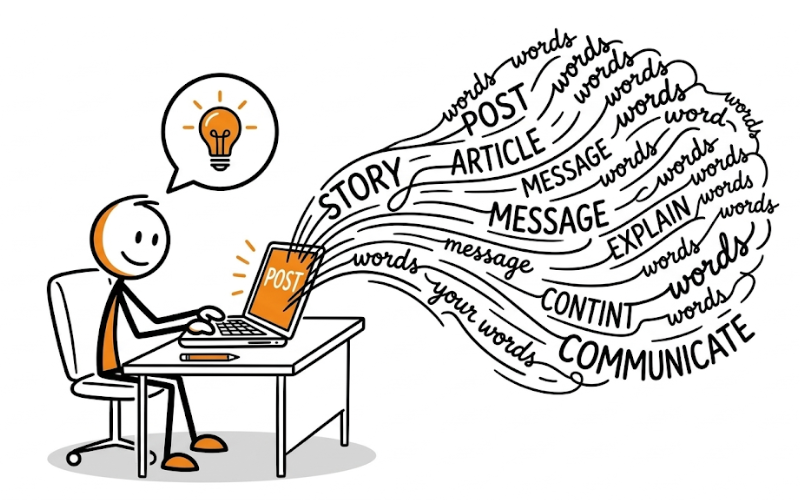
The internet is not made of technology. It’s made of words. Technology just delivers them.
Why This Moment, Specifically, Is Worth Taking Seriously
I’m not going to tell you content writing is a magic career path with no effort involved. That would be dishonest, and you’d figure it out quickly anyway.
But I will tell you this honestly: the window that exists right now — for someone willing to learn this skill — is genuinely significant.
Businesses in India and globally are moving online faster than the supply of good writers can keep up with. Not writers who sound impressive. Writers who can explain things clearly, answer the right questions, and make a reader feel understood. That gap is real, and it’s wide.
At the same time, the tools available to learn this have never been better. The feedback loops are faster. You can publish something today and know within days whether it worked. That wasn’t true ten years ago.
The people who start now — who learn the skill while others are still waiting to feel ready — are the ones who’ll have something real to show in a year. Not a certificate. An actual body of work.
That body of work is what opens every door. Clients, jobs, your own platform, your own business — all of it starts from the same place. From someone deciding to take this seriously and beginning.
One More Thing Before We Go Further
If your English isn’t perfect — I want you to hear this clearly: it doesn’t matter as much as you think.
The content that performs best on the internet isn’t the most grammatically pristine. It’s the most understood. Short sentences. Plain words. Ideas explained the way you’d explain them to someone you actually care about, who genuinely wants to get it.
The best content writers I know don’t write to impress. They write to be useful. Those are very different targets, and the second one is within reach of almost anyone willing to practice.
Your grammar will improve as you write more. Your vocabulary will expand. Your instinct for what readers need will sharpen. But none of that happens before you start — it all happens because you start.
The Right Time Is Right Now
Not when your English is better. Not when you have more time. Not when you feel more confident. Those conditions will never all be perfect at once — and waiting for them is how years go by without anything changing.
The version of you that looks back and wishes they had started sooner? That person is made right now, in the decision you make today.
You already know how to communicate. The next step is learning to do it with intention. That’s exactly what this series is here for — let’s keep going.